The question “Can you recycle pizza boxes?” ranks among the most confusing recycling dilemmas for households and businesses alike. While pizza boxes are made from corrugated cardboard, a highly recyclable material, the presence of grease, cheese, and food residue creates uncertainty about proper disposal methods. This blog will clarify exactly when and how pizza boxes can be recycled, what to do with greasy parts, and how both consumers and businesses can make better decisions about pizza box disposal.
Key Takeaways
- Most pizza boxes are recyclable as long as they are clean or only lightly stained; heavy grease, cheese, and food residue make cardboard unsuitable for recycling.
- Grease contamination is the main issue, as oils interfere with the pulping process and can compromise entire batches of recycled paper.
- You can recycle clean portions of a pizza box by tearing off grease-free sections and placing them in your recycling bin while composting or discarding soiled parts.
- Local recycling guidelines vary, meaning what’s acceptable in one community may be rejected in another; always confirm your municipality’s rules.
- Composting greasy pizza boxes is an eco-friendly alternative, keeping them out of landfills and supporting waste diversion when recycling isn’t possible.
Are Pizza Boxes Recyclable? The Short Answer
Yes, pizza boxes are recyclable when they meet specific cleanliness standards. The key factor determining recyclability isn’t whether the box touched pizza, but rather the level of contamination present.
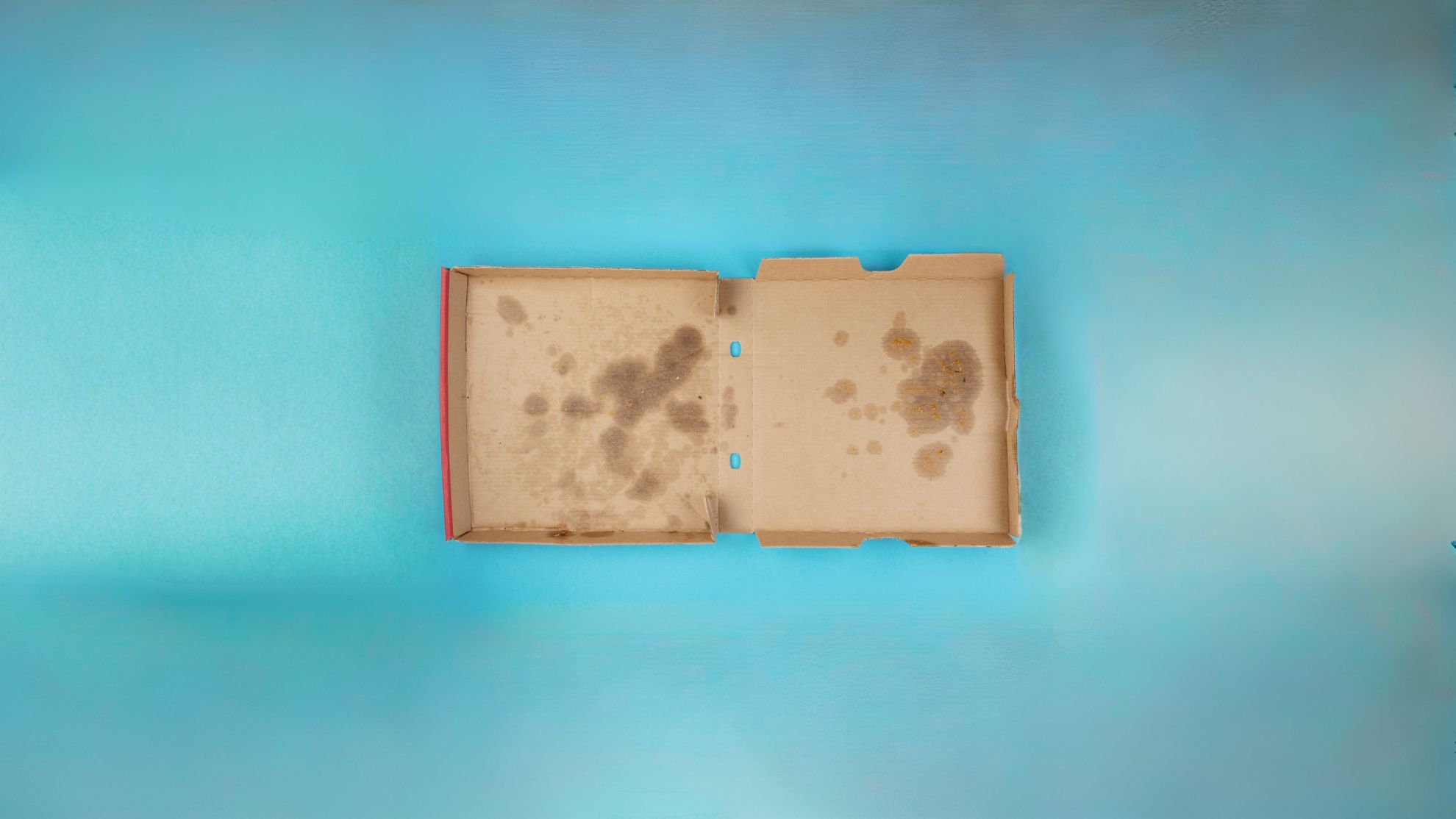
Clean, dry corrugated cardboard from pizza boxes can be processed through standard paper recycling facilities alongside other cardboard boxes. Light grease stains, the kind that leave visible marks but don’t saturate the cardboard, are often acceptable depending on your local recycling program’s contamination thresholds.
However, pizza boxes with heavy grease saturation, pooled oil, stuck cheese, or significant food residue should not enter the recycling stream. These contaminants can ruin entire batch processing at paper mills, where oil and water don’t mix during the pulping process.
The recyclability decision ultimately depends on three factors: the contamination level of your specific box, your local recycling facility’s equipment capabilities, and current municipal recycling guidelines. When in doubt, the safest approach is removing clean sections for recycling while disposing of heavily soiled parts through composting or trash.
Why Grease Affects Recycling
Understanding the science behind paper recycling helps explain why grease creates such problems for recycling facilities. The pulping process that transforms used cardboard into new paper products relies on mixing shredded materials with water in what’s essentially a large soapy bath.
During pulping, clean paper fibers separate and suspend in water, allowing contaminants like inks and adhesives to be filtered out. However, oil and grease don’t dissolve in water; they separate and float, dispersing throughout the pulp mixture. This contamination interferes with paper fiber bonding during the formation of new cardboard products, resulting in weaker, lower-quality recycled materials.
More critically, excessive grease can contaminate an entire batch of recycled pulp. Paper mills process massive volumes of material, and a small amount of heavily contaminated cardboard can compromise thousands of pounds of otherwise clean recyclables. This is why recycling facilities maintain strict contamination limits and why materials recovery facilities invest significant effort in screening out problematic items.
How to Check If Your Pizza Box Is Recyclable
Determining whether your pizza box belongs in the recycling bin requires a systematic inspection process that takes just a minute but makes a significant difference for recycling program success.
Inspect for Grease
Start by examining the bottom of the box where the pizza directly contacted the cardboard. Light, dry stains that have absorbed into the cardboard but don’t feel oily to the touch are generally acceptable. However, areas where grease has pooled, cardboard feels saturated, or you can see oil when holding the box up to light should be considered non-recyclable.
The “napkin test” provides a reliable assessment: if pressing a clean napkin against the cardboard picks up oil or grease, that section is too contaminated for most recycling programs, especially when recognizing key misconceptions addressed in common recycling myths busted.
Remove All Food Residue
Every bit of cheese, crust, sauce, and toppings must be completely removed before recycling. Even small pieces of stuck cheese can create problems during pulping, as dairy products introduce different types of contamination that don’t break down properly in the recycling process.
Check corners and edges where cheese often melts and adheres to cardboard. These pieces should go in your trash or compost bin, never in recycling.
Tear and Separate Clean Portions
Most pizza boxes can be divided into recyclable and non-recyclable sections. The top lid typically remains clean and can be recycled like any other corrugated cardboard. The bottom half, which bears the brunt of grease absorption, often needs alternative disposal.
Separating clean from contaminated sections maximizes resource recovery while protecting recycling stream quality. Flatten clean cardboard pieces to save space in your recycling bin.
Local Guidelines Matter
Other municipalities maintain strict “no grease” policies, requiring complete removal of any stained sections. Check your local recycling program’s website or contact your waste management provider directly to understand your area’s specific requirements.
What to Do with Greasy Pizza Boxes
When pizza boxes are too contaminated for recycling, several eco-friendly alternatives keep this valuable organic material out of landfills while supporting other environmental goals.
Composting (Best Option for Greasy Parts)
Composting represents the optimal disposal method for grease-soiled pizza boxes. Unlike paper recycling, composting systems benefit from the carbon content in cardboard while naturally breaking down food oils through microbial decomposition.
For home composting, rip greasy cardboard into small pieces to accelerate breakdown. The cardboard provides essential carbon to balance nitrogen-rich food scraps, improving compost quality while retaining moisture in the pile. Most backyard compost systems can handle pizza box cardboard as long as you avoid boxes with plastic coatings or windows.
Commercial Compost Facilities
Many municipalities operate sophisticated composting programs that accept food-soiled paper products, including greasy pizza boxes. These industrial facilities use controlled temperature and oxygen levels to efficiently process materials that might be challenging for backyard composters.
Commercial composting operations often produce higher-quality finished compost than home systems and can handle larger volumes of cardboard, aligning well with responsible practices supported by understanding the importance of responsible waste disposal. Check whether your city offers curbside organics collection that accepts soiled paper products.
Trash as a Last Resort

When neither recycling nor composting options are available, disposing of heavily contaminated pizza boxes in regular trash becomes necessary. While this represents the least environmentally beneficial option, it’s preferable to contaminating recycling loads or composting systems that can’t handle the material properly.
Before resorting to trash disposal, consider whether any portions of the box remain clean enough for recycling or composting. Even removing and recycling just the top lid reduces landfill waste compared to throwing away the entire batch.
Why Recycling Pizza Boxes Matters
Corrugated cardboard represents one of the most successfully recycled materials in the United States, with recovery rates exceeding 90% for some categories. Pizza boxes, despite their contamination challenges, represent a massive opportunity for resource conservation when handled properly.
The volume of pizza boxes generated annually is staggering; estimates suggest Americans use billions of pizza boxes yearly, creating approximately 600,000 tons of potential recyclable material. When these boxes successfully navigate the recycling stream, they become new shipping boxes, packaging materials, and paper products, reducing demand for virgin wood fiber.
Proper pizza box recycling supports the broader economics of municipal recycling programs, reducing contamination that drives up operational costs and contributes to systemic waste challenges recognized in the environmental impact of proper waste management practices. Contamination from improperly disposed of greasy cardboard can force entire batches of materials to be rejected, imposing financial costs on recycling facilities and potentially making programs less viable for communities.
How Pizza Boxes Are Recycled

Understanding the recycling process helps explain why contamination standards exist and how properly prepared pizza boxes become new products. The journey from used box to recycled material involves several precise steps that require clean input materials.
At recycling facilities, cardboard boxes are first sorted by type and quality. Clean corrugated cardboard like pizza box material commands premium prices because its long, strong fibers produce high-quality recycled products. Sorted materials are then compressed into dense bales for efficient transportation to paper mills.
The actual recycling happens at paper mills through pulping, mixing shredded cardboard with water and chemicals in large vessels. Clean cardboard dissolves into individual fibers that can be filtered, cleaned, and reformed into new paper products. The pulp mixture passes through screens and flotation systems that remove contaminants like inks, staples, and adhesives, a process that becomes more efficient when recognizing guidelines followed in how to dispose of commercial waste.
Common Myths About Pizza Box Recycling
Persistent misconceptions about pizza box recycling contribute to both contamination problems and missed recycling opportunities. Addressing these myths helps consumers make better disposal decisions.
Myth 1: No pizza boxes are recyclable
This outdated belief stems from older recycling technology that couldn’t handle any food contamination. Modern paper mills can process pizza boxes with light grease staining, and many recycling programs now accept them. The blanket prohibition on pizza box recycling no longer reflects current industry capabilities.
Myth 2: A little cheese is okay
While light grease stains may be acceptable, any food residue, including small pieces of stuck cheese, must be completely removed before recycling. Cheese and other dairy products create different contamination issues than grease and can interfere with pulping in ways that aren’t easily addressed by standard cleaning processes.
Myth 3: Grease always makes boxes unrecyclable
The amount of grease contamination determines recyclability, not just its presence. Light, dry staining that has been absorbed into cardboard fibers is often acceptable, while soaking wet or heavily saturated cardboard crosses the contamination threshold for most facilities.
Myth 4: All recycling centers have the same rules
Recycling acceptance criteria vary dramatically based on local processing capabilities, market conditions, and municipal policies. What’s acceptable in one city may be rejected in another. Always verify current guidelines with your local recycling program rather than assuming universal standards.
These myths often lead to “wish cycling”; putting questionable items in recycling bins and hoping they’ll be sorted properly. While well-intentioned, this approach can contaminate clean materials and create additional costs for recycling programs.
How Restaurants and Pizzerias Can Improve Pizza Box Recycling
Food service businesses play a crucial role in pizza box recyclability through packaging choices, customer education, and waste management practices that can significantly impact downstream recycling success.
Restaurant owners can specify compostable grease-resistant liners when ordering pizza boxes, reducing direct contact between food oils and cardboard. These biodegradable barriers keep the main box cleaner while providing the same functional protection. Some suppliers offer boxes with enhanced grease resistance through cardboard treatment rather than plastic coatings.
Staff training on customer communication creates opportunities to educate consumers about proper disposal. Simple signage explaining recycling guidelines or brief mentions during order taking can help customers understand how to handle boxes responsibly. Many customers appreciate businesses that provide clear environmental guidance.
Wrapping Up
Recycling pizza boxes isn’t as complicated as many people think; most boxes can be recycled as long as they’re free of excessive grease and food residue. By understanding what qualifies as recyclable and what belongs in compost or trash, you can help reduce contamination and support smoother, more efficient recycling made easy systems in your community.
As you make more informed disposal choices, Red Oak Sanitation & Recycling is here to support your efforts with reliable and sustainable waste solutions. Whether you’re managing curbside materials, navigating recycling questions, or scheduling waste pickup in Canton, our team provides dependable residential and commercial services that make proper disposal easier for households and businesses alike. Let us help you improve your recycling habits with services designed to keep your materials sorted, collected, and processed responsibly.
Frequently Asked Questions
Can all pizza boxes be recycled?
Not all pizza boxes can be recycled. Clean and lightly stained boxes are acceptable in most recycling programs, but boxes with heavy grease, pooled oil, cheese, or food residue should be kept out of the recycling bin. Clean sections can still be separated and recycled.
Why does grease make pizza boxes hard to recycle?
Grease doesn’t mix with water during the pulping process used to recycle cardboard. Instead, it spreads through the pulp mixture and weakens the final product. Excessive grease can contaminate an entire batch of recycled fiber, so facilities maintain strict limits on greasy materials.
How do I know if my pizza box is too greasy to recycle?
Use a quick inspection: if the cardboard feels oily, looks saturated, or fails the “napkin test” (a napkin pressed against the cardboard absorbs oil), it’s too contaminated for recycling. However, clean lids or sections free from grease can still be recycled.
What should I do with greasy pizza boxes instead of recycling them?
Greasy boxes are excellent for composting. Tear them into small pieces for backyard composting or place them in municipal organics programs if available. If composting isn’t an option, dispose of heavily soiled sections in the trash to avoid contaminating recycling streams.
Do all recycling programs accept pizza boxes?
No. Acceptance rules vary widely depending on local processing capabilities and contamination policies. Some cities accept lightly greasy boxes, while others require completely clean cardboard. Always verify your local recycling guidelines to ensure proper disposal.